Your birth decan, and your birth cards.
Two results from one date: the birth decan the Sun was actually in, which needs an ephemeris and is why nowhere else gives it to you, and the birth cards everybody computes from the digits.
What tarot card am I, based on my birthday?
Add the month, the day, and the year as two pairs of digits. Someone born on 14 March 1993 adds 3, 14, 19 and 93 and gets 129. Add the digits of that: 1, 2 and 9 make 12, the Hanged Man. A two digit result names a second card, because 1 and 2 make 3, the Empress, so that person carries the Hanged Man and the Empress together, and most people carry two. A total over 22 is added down again until it is not, and a total of exactly 22 is the Fool, which the majors number as zero. This is the method Angeles Arrien set out and Mary Greer refined, and it is what the calculator above does.
What decan am I?
That is the other answer this page gives, and the one that needs an ephemeris. Your birth decan is the ten degrees of the zodiac the Sun actually stood in on the day you were born, and the numbered card the Golden Dawn gave those ten degrees in 1888. Someone born on 5 September has the Sun at about 12° of Virgo, which is Virgo II, the Nine of Pentacles. There are thirty-six of them, the Sun spends about ten days in each, and the boundary between two moves by a day from year to year, which is why a table of dates is wrong at the edges and this page computes yours from an ephemeris instead. All thirty-six decans and their cards, or find yours by sign from the result above.
The year card
The same sum with the current year in place of your birth year gives the card for this year of your life, which changes on your birthday rather than on 1 January. It runs forward one major at a time, so if this year is the Chariot, next year is Strength, and the year after is the Hermit, until the count folds back down.
The nine birth-card pairs, and what each one says
Every total from 10 to 22 adds down to a single digit, so the twenty-two majors fall into nine lines: 10 sits over 1, 11 over 2, and so on to 18 over 9, and 19, 20, 21 and 22 fold down a second time onto 1, 2, 3 and 4. A birth carries the whole line, and the calculator names the cards on it. Mary K. Greer's Tarot Constellations (1987) reads each line as one temperament. What follows is that reading, kept short, against the pictures.
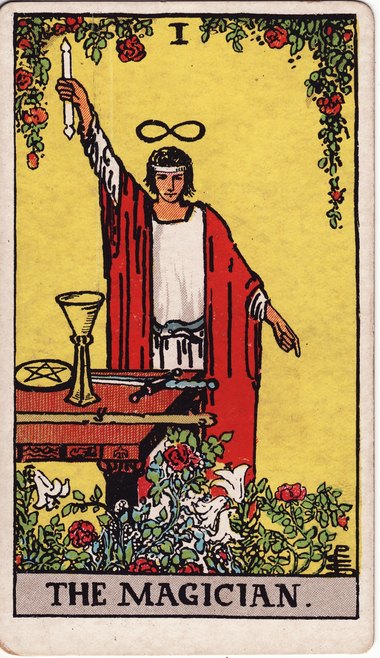
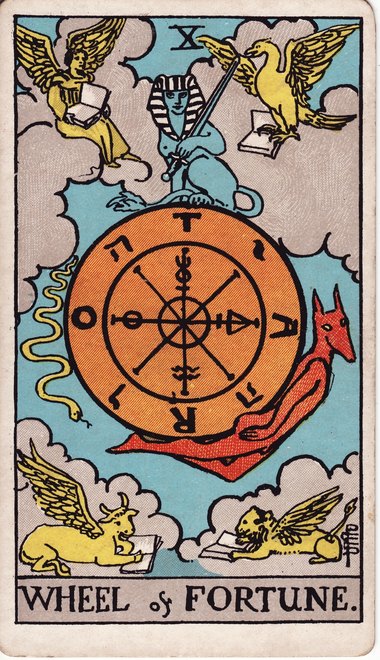
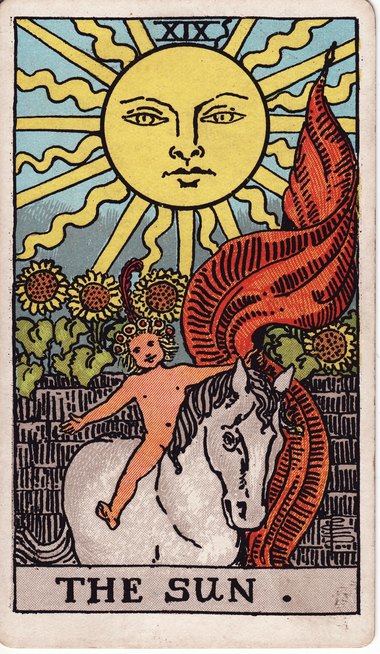
The Magician, the Wheel of Fortune and the Sun: sums of 1, 10 and 19
A hand raised over a table of tools, a wheel that turns without asking, a child on a white horse in full light. The Magician is the will to do; the Wheel is what turns whether you will it or not; the Sun is what is left when the turning stops. Greer reads the three together as someone who makes things happen and has to learn which things were never theirs to make. If your card is the Wheel, the Magician is the skill it hands you and the Sun is what the skill is for.
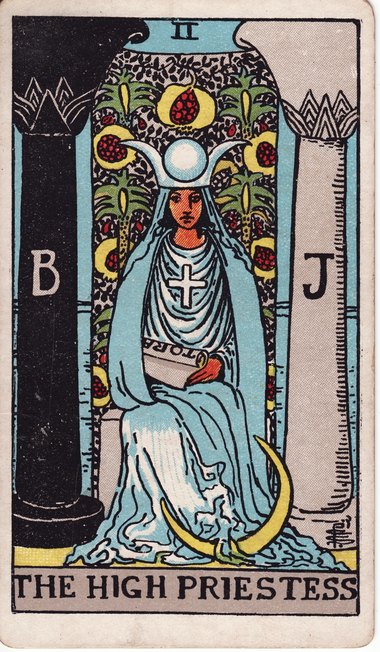
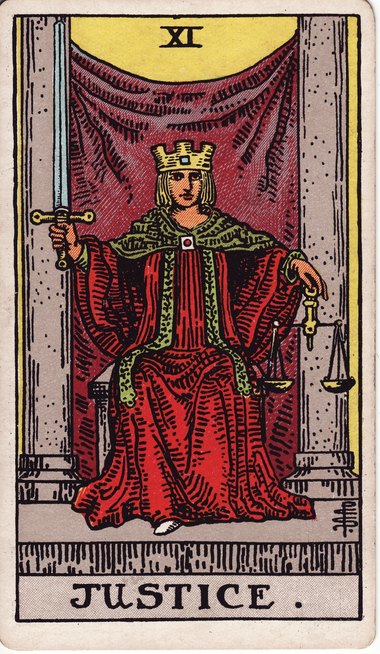
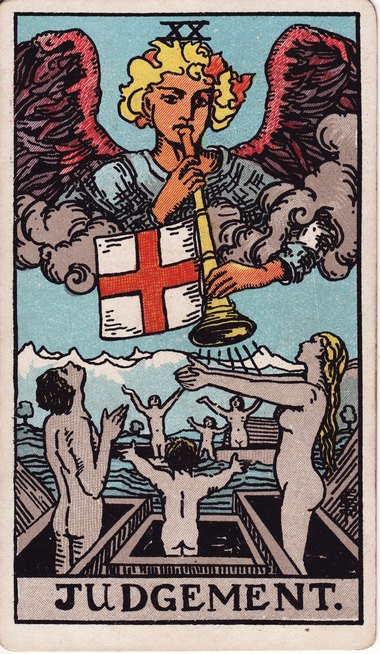
The High Priestess, Justice and Judgement: sums of 2, 11 and 20
A woman seated before a veil with a scroll half hidden in her robe, a pair of scales held level, a trumpet that wakes the dead. Greer reads this line as the one that knows before it can say: the Priestess holds what is not yet spoken, Justice weighs it, Judgement calls it out loud. People on this line are trusted with secrets and asked for verdicts, and the work of the line is to give the verdict without giving up the secret.
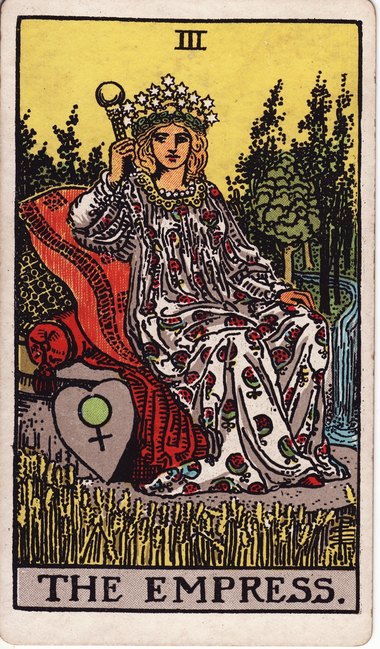
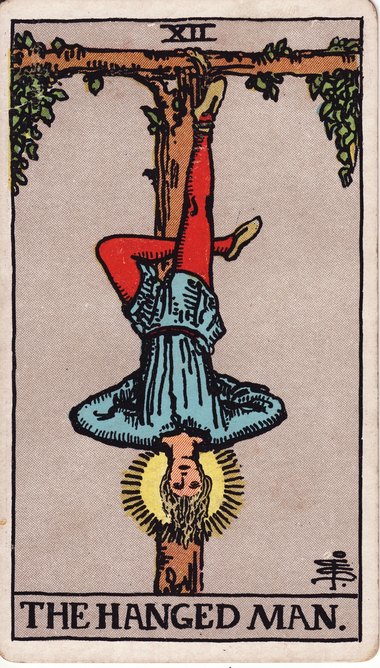
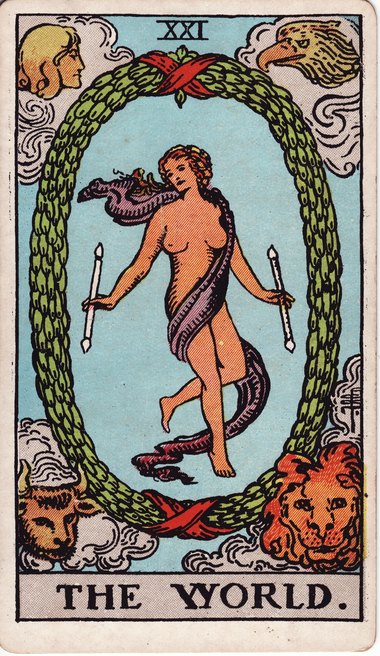
The Empress, the Hanged Man and the World: sums of 3, 12 and 21
A woman on a cushioned throne in a field of ripe wheat, a man hung by one foot and entirely at ease, a dancer inside a wreath. The Empress makes; the Hanged Man waits, and sees the whole thing the other way up; the World finishes. Greer's reading is a life that grows things and has to let them hang before they are done. If your pair is the Hanged Man and the Empress, the waiting is the making.
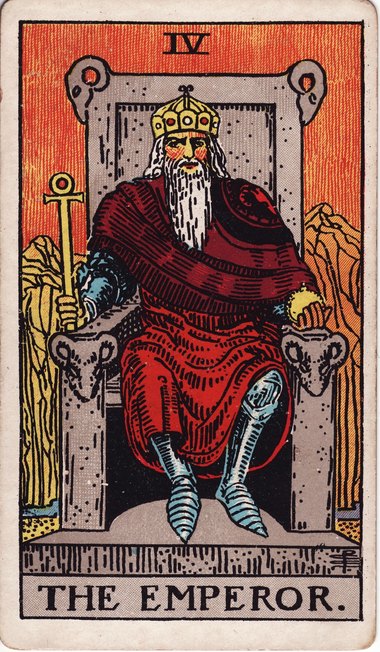
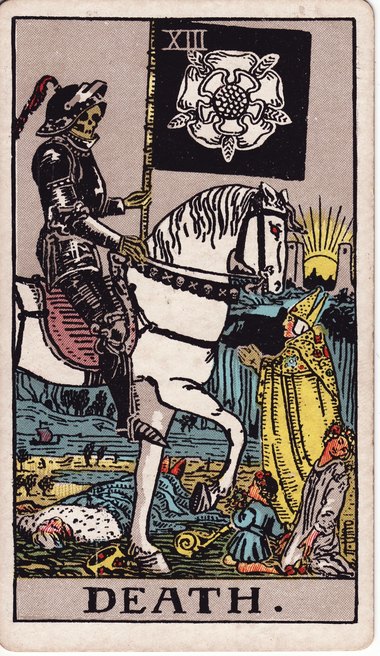
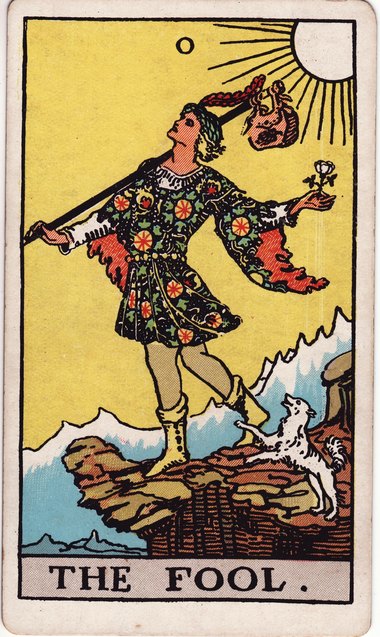
The Emperor, Death and the Fool: sums of 4, 13 and 22
A man on a stone throne with rams at his elbows, a skeleton in black armour on a white horse, a young man walking toward the edge of a cliff. The Emperor sets the rule; Death ends it; the Fool sets out again without one. Greer reads the line as people who build order and are made to leave it, more than once. It is a hard set of cards to be handed at first and the most complete arc in the deck: begin, rule, end, begin.
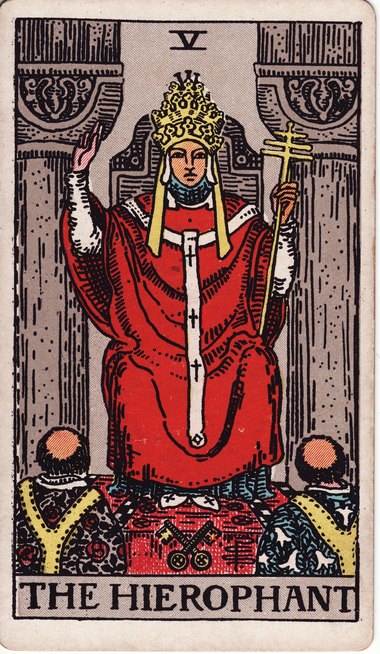
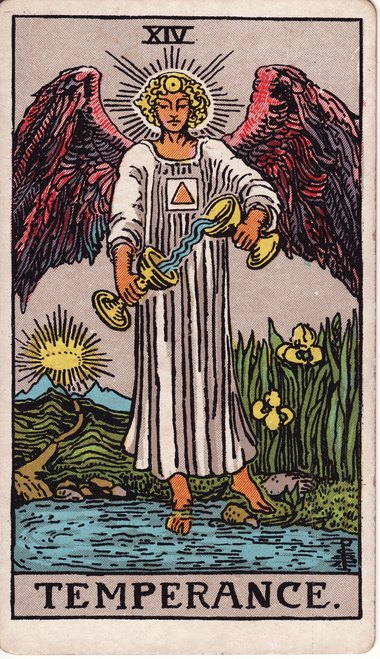
The Hierophant and Temperance: sums of 5 and 14
A teacher between two pillars with two students kneeling at his feet; an angel pouring water from one cup into another without spilling. The Hierophant hands on what was handed to him; Temperance mixes what does not want to mix. Greer reads the pair as the teacher who learns by measuring, someone whose authority comes from getting the proportions right rather than from the chair. If this is your pair, people ask you how much, and you know.
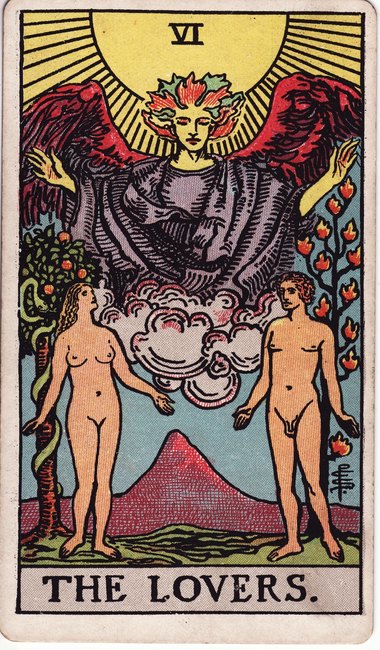
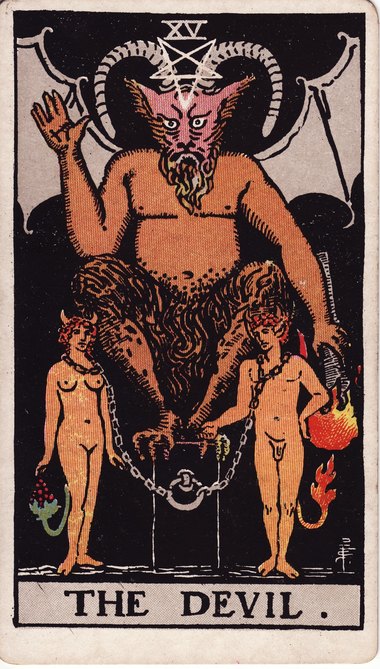
The Lovers and the Devil: sums of 6 and 15
An angel over two people who have just noticed each other; the same two, loosely chained, under a horned figure on a block. The pictures rhyme on purpose: Smith drew the Devil card as the Lovers card with the angel replaced. Greer reads the pair as a life whose question is choice, and whose lesson is that the chains in the second picture are loose enough to lift off. If your pair is this one, the thing you are bound to is a thing you chose.
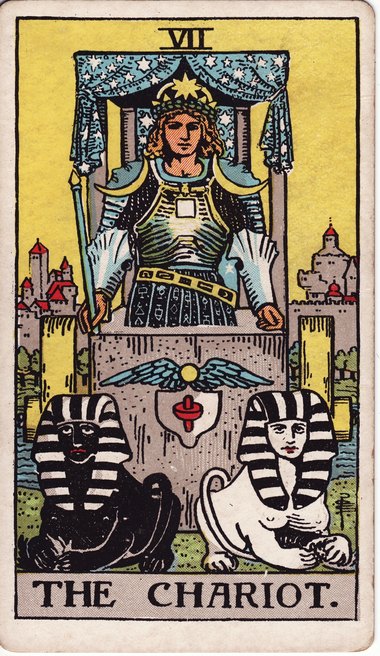
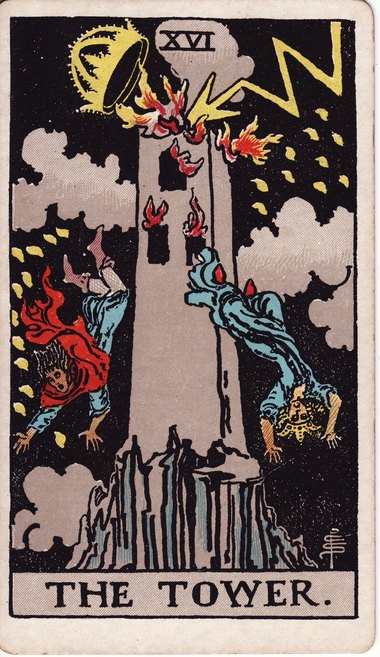
The Chariot and the Tower: sums of 7 and 16
A charioteer holding two sphinxes still with no reins, by will alone; a tower struck by lightning and two people falling from it. The Chariot is control; the Tower is what control was built on giving way. Greer reads the pair as drive, the crash that drive eventually meets, and the rebuilding on better ground. People on this line get somewhere fast. Where they get to is the question the pair keeps asking.
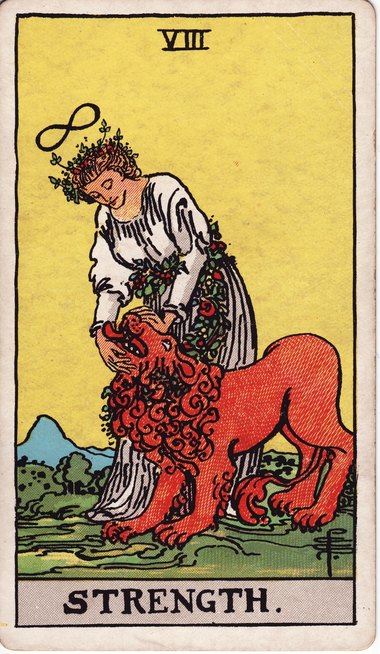
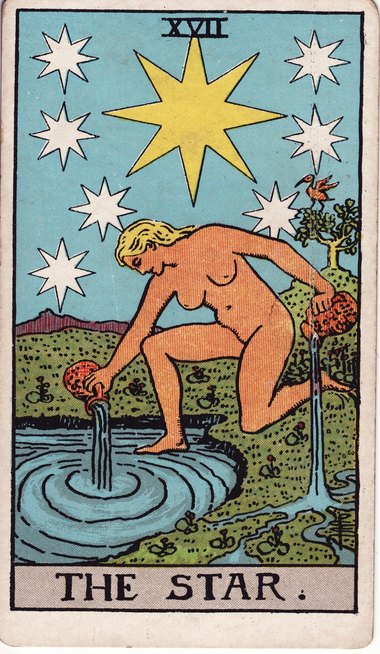
Strength and the Star: sums of 8 and 17
A woman closing a lion's mouth with her bare hands and no force in them; a woman kneeling at a pool, pouring water back into it and onto the land. Strength is patience with a live animal; the Star is what the patience is for. Greer reads the pair as the gentlest line in the deck and not the softest, because the lion is real. If this is your pair, you are the one people bring the lion to.
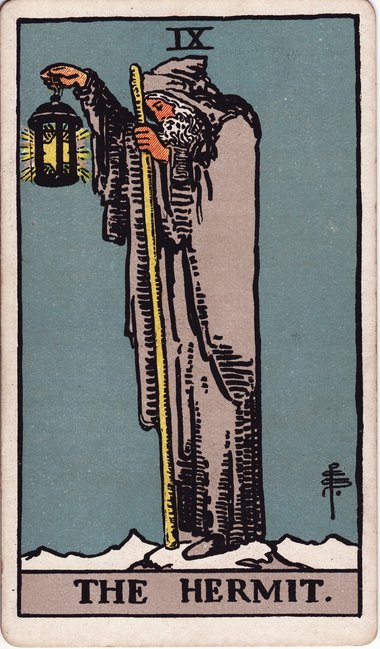
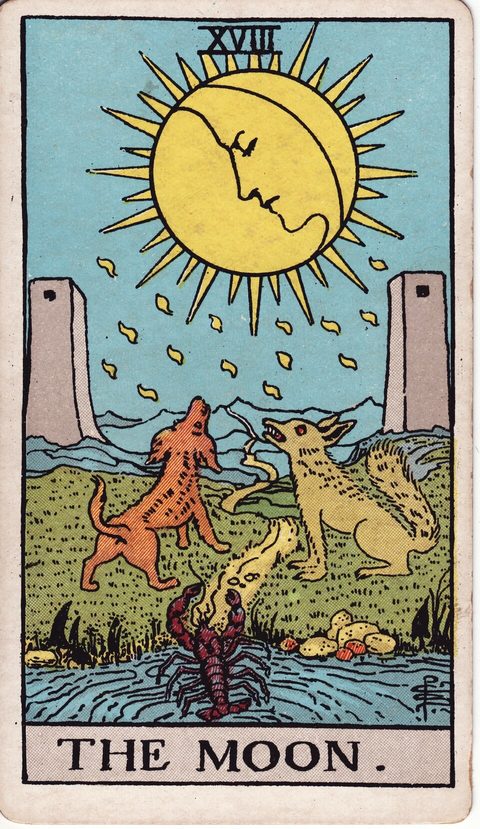
The Hermit and the Moon: sums of 9 and 18
An old man on a peak holding a lamp out for someone below; a road between two towers under the moon, with a dog and a wolf howling at it. The Hermit has walked the road and holds the light; the Moon is the road at night. Greer reads the pair as the seeker, and the seeking never quite finishes: every Hermit was on that road once, and some part of him is still on it.
The birth decan, which nobody else gives you
Digit sums are arithmetic on the calendar. The birth decan is astronomy. The zodiac is thirty-six pieces of ten degrees, and the Golden Dawn gave each piece one of the thirty-six numbered cards. Where the Sun actually stood at the minute you were born, worked out from an ephemeris rather than a table of dates, puts you on one of them. Two people born a day apart can fall on different cards, and the boundaries move by about a day every four years, which is why a date table is not enough and why this page asks for the date and, if you have it, the time. With a time it can also place the Moon and the five visible planets on their own cards, which is a spread of your own sky.
The decan table is the Golden Dawn's, from Book T, 1888. The birth card method is Angeles Arrien's, from The Tarot Handbook, 1987. The positions are computed on this page at the minute you press the button, and nothing is sent anywhere.