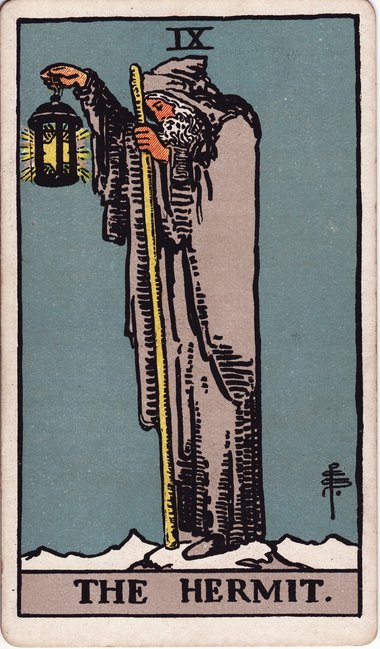
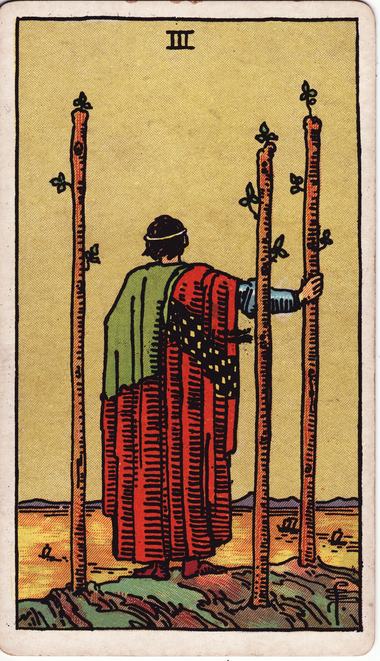
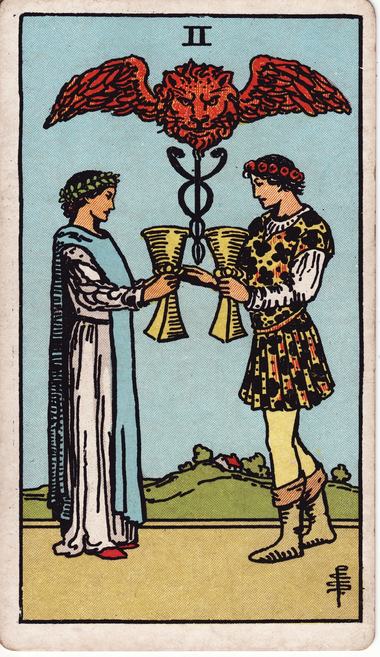
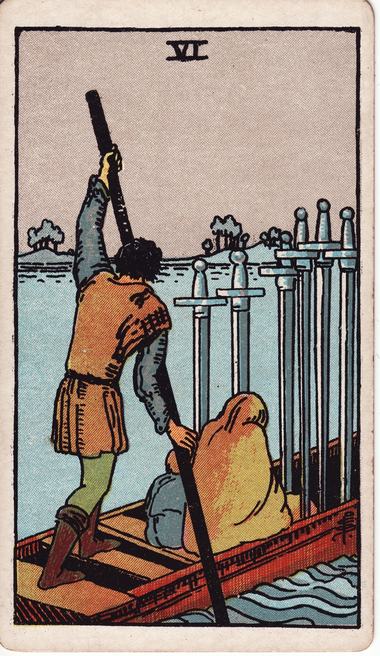
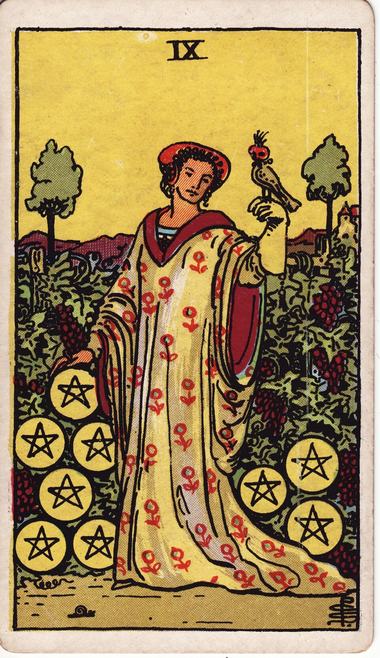
You bring a question, or just the day. The spread that fits it is laid on the cloth, with each position named, and you take the cards out of the deck face down. Then you turn them, one at a time, with a pause on each to look at it. The reading is written from the cards in their positions, and it says which lines are facts about the sky and which are readings. Then it asks one thing: did anything catch your eye? Touch it on the card and the reading is rewritten from that detail.
The card is ambiguous on purpose, and the half you supply is the half that makes the reading yours. Two people who notice different things in the same card get two different readings, and both are right.
The deck
WandsCupsSwordsPentacles
Seventy-eight cards. Twenty-two majors, numbered 0 to 21, from the Fool to the World, which carry the big arcs: beginnings, choices, endings, luck, judgement. Fifty-six minors in four suits, which carry daily life.
Wands are will, work and fire: what you are doing. Cups are feeling and water: what you are feeling. Swords are thought and air: what you are thinking, and the trouble thinking makes. Pentacles are the body, money and earth: what you have and what you are building.
Each suit runs from the ace, the seed of the suit, through two to ten, a story in nine steps from a first pairing to a completion, and then four court cards: the page who learns, the knight who acts, the queen who holds and the king who rules. In this deck every number card is a picture of a moment, which is why looking works.
Reading by looking
Take the Nine of Pentacles. A woman in a garden, a bird on her glove, coins on the vines, and, almost hidden by her hem, a snail. Most people go to the bird. Some go to the coins. Almost nobody goes to the snail, and the ones who do have said something about pace before a word of interpretation has been offered. The book meaning of the card is comfort earned; what you noticed is what the reading is about.
So the method is: look before you know. Name the first thing. Then let the position and the tradition catch up. A reversed card, when the deck was cut, reads as the same picture met from the wrong side: delayed, inward, or overdone.
The sky, and why a card here can carry a date
The year is a circle of 360 degrees, and the zodiac cuts it into twelve signs of thirty. In 1888 the Golden Dawn cut each sign into three parts of ten degrees and gave one numbered card to each, so that the thirty-six number cards, two to ten in four suits, cover the whole year between them. The Nine of Pentacles, for instance, owns the middle ten degrees of Virgo, which the Sun crosses in the first half of September.
The Sun, the Moon and the planets move through those degrees on a known timetable. This site runs that arithmetic while you read. When one of them is on your card at that minute, the reading says so in a gold line, with the date it moves on, and calls it a power draw. When none is, it says nothing. Between one and seven of the seventy-eight cards are a power draw at any moment, and which ones changes as the sky does: the thirty-six decans page shows the occupied ones in gold right now. That sentence is the one thing here that would be false if it were wrong, and nobody else prints it.